Fear and Trembling — Panic Attacks and Me

February 25th, 2008

The first time I had a panic attack, I didn’t know what was happening, and neither, it seemed, did anybody else. I felt what folks who suffer from anxiety states and panic attacks will well recognize — that foggy, sticky sense of doom. Mind whirring, heart galloping, palms slick and limbs unsteady — surely I was dying, slipping over the muddy edge of my grave; or if not, I was going completely and irredeemably mad.The worst of it was, I was only a little kid at the time. In my innocence, I thought that when I grew up to be wiser and more knowledgeable, I would understand what was happening to me and know there was nothing at all to fear. I would grow up to be strong, brave, and resilient, and I would understand just how silly my childish self had been.

Instead, I grew up to have panic attacks that were even more devastating, since adulthood and knowledge had given me far more things to be afraid of and considerably more medical insight into the various ailments that could be (must be!) stalking my poor trembling body. Combine a certain amount of relevant physiological knowledge with my vivid, complex, natural story-teller imagination, and the playful nip of a neighborhood dog was transformed into a slow, agonizing death from rabies, just as every case of indigestion was either a heart attack or a dissecting aortic aneurysm.

Even though I was rational enough to understand how unlikely these scenarios of doom were, I couldn’t seem to stop the dizzying spiral of mental obsessing, nor the adrenaline surges that played such havoc with my pulse and blood pressure. And then, of course, I further worried (more reasonably) about the very real effect the physical manifestations of my mental terror were having on my heart and blood vessels.

I realize I’m speaking as if this is all in the past, but it isn’t, not entirely. I did learn to understand the neural mechanism of anxiety, and psychotherapy helped give me insight into what may have been some of the factors that increased what is probably my genetic disposition towards some easy-to-excite, slow-to-inhibit neurons. Several drugs, including Zoloft, Paxil, and Celexa among the SSRIs, and Klonopin among the benzos helped during the really bad times (some of the other benzos, like Xanax, had nasty snap-back-into-panic-while-wearing-off effects that discouraged me from using them and my doctors from prescribing them for me). Certain breathing and meditation techniques have also been helpful over the years, as has exercise.

But perhaps the most useful thing I’ve learned about anxiety/panic is that I manage these episodes better when I can just remember to let go and stop fighting. Instead of allowing that almost automatic “Oh no! It’s happening again! What if….what if….what if….” to wind its tentacles into my brain, I get through it much faster and more easily if I can go, “Yeah, yeah, big deal, I’ve seen this all before. If I’m going to faint right here in the elevator and make a scene, then so what, I’ll faint. If I’m about to drop dead, fine, so be it. If I’m about to have a stroke and crash into the tree, then goodbye world. If I’m about to start screaming, hallucinating, and crazily foaming at the mouth, then fine, I’ll be psychotic. Nothing I can do about it, is there? Come on, Fear, I dare ya. Here I am — come and get me.

Usually — not always, but usually — the not-fighting, the acceptance allows the fear to pass over and through me, leaving me shaky, but still standing, still here, still sane, and still able to summon a smile.


Women and HIV-AIDS: Disappointing News

February 21st, 2008

This week’s medical news brought a report about the disappointing results of one of the (thought to be) most promising weapons in the small arsenal against HIV-AIDS: a vaginal gel microbiocide, Carroguard. The gel was being tested in a large-scale trial in South Africa and Botswanna. This clinical trial had been ongoing for three years, but unfortunately, the number of women who became infected with HIV during the trial from the group who used Carroguard was very similar to the number of women in the control group who also seroconverted. Essentially, this means the drug did not work.

Granted, there are some questions about the results since it is always difficult to calculate whether the women in the study used the drug regularly and correctly. Did they faithfully insert the gel before having sex? If not, the results of the study may not reveal the entire picture.

Why is this news significant? There are currently about 33 million people infected with HIV-AIDS. Over the years, we have heard of many failures in the various HIV-AIDS agents and therapies, although there have also been some major successes. But the drugs that have been shown to fight the stubborn and infinitely clever HIV virus have not, thus far, prevented infection. Instead, therapies like Zidovudine (AZT) and Nevirapine (which prevent the HIV virus from replicating inside infected human cells) and the HIV protease inhibitors (which stop mature new viruses from being produced) interfere with the HIV virus’s activity after it has already infected its victim. Such agents, usually used in combination with each other, have given life and hope to millions of people infected with the HIV virus. But they do not cure AIDS, nor do they prevent the virus from entering human cells and beginning its deadly siege of the human immune system.

The microbiocide gels work in an entirely different manner. The goal for this type of drug is to prevent the transmission of the virus by blocking its initial entry into human cells. The point here is not to cure the disease, but to prevent a person being infected in the first place.

According to a 2004 report of the Joint UN/World Health Organization, a microbiocide, even if only 60 % effective, could result in a major reduction of new HIV infections among women. If applied vaginally prior to intercourse by 20 percent of women in 73 low income countries, it could prevent 2.5 million new infections over a three year period.

This assumes, of course, that the microbiocide works. Different microbiocides use different methods to achieve their goals – for more on this topic see WHO’s website.

Such an approach is urgently needed. During sexual intercourse, the receptive partner is more susceptible to the virus than the penetrative partner, meaning that women are more likely to acquire the virus from men than vice versa. Since power dynamics in relationships often make it difficult for women to insist upon the use of condoms, the development of a topical agent that women could apply prior to intercourse is vital.

There has generally been a failure by public health officials to recognize that gender inequality all too often deprives women of the right either to decline sex or to insist upon the use of condoms. This situation is worse in some countries than in others, and is related not only to the status of women in a particular nation, but also to their age, level of education, and personal power within their sexual relationships.

If effective microbiocides can be researched and developed, and if women can be taught to use them regularly, they could potentially prevent millions of new infections in the years to come. This would greatly benefit women at risk for AIDS, an important goal since women now represent 50 percent of the global total of AIDS-infected individuals. It would also benefit children, since it is believed that 97 percent of infants with AIDS acquire the virus from their mothers.

More info on microbiocides

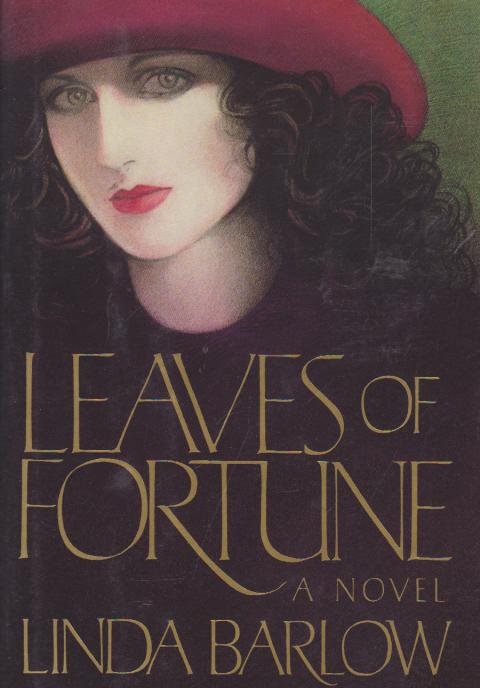
Paper written by Linda Barlow on macrobiocides


President Hillary — It’s About Damn Time!

February 6th, 2008

I’ve been following politics more this year than I usually do because I have something huge at stake — the possibility of seeing something I didn’t expect to see in my lifetime: the first female President of the United States. As a child in the 1950s, I briefly believed that I could dream any dream about the future, and that I, a girl, could one day grow up to be President. But the adults all laughed at me. What a silly idea. A girl couldn’t grow up to be President.

I’m not yet convinced that a girl can grow up to be President, given the ups and downs of the current campaign. Ever since Hillary Clinton was First Lady, I’ve believed that a fair amount of the loathing directed at her by folks from both ends of the political spectrum was largely inspired by the XX in her genome vs. the XY in the genomes of the members of the Power Elite. Not even Bill, her smooth, charismatic husband, has acquired quite the same number of detractors, despite his selfishness, quick temper, and frequent infidelities. For all his faults, Bill is a good old boy, who can play golf and trade dirty stories with the best of ‘em. Hillary’s a female. A brainy female. A brainy female who fights back when attacked. A brainy female who has shown that she knows how to win. A brainy female who can do the deals and play the games politicians have to play. A woman of our time — finally! — who can lead this country.

Barack Obama’s position on the various issues is actually closer to my own, but Obama didn’t get my vote yesterday in the Massachusetts primary, nor will he get my support or my campaign contributions now. Let him take second place on the ticket with Hillary as our President, and I’ll be well content. His speeches, so far, are little more than rhythmic, rousing rhetoric. Sorry, hon, but I’ve heard it all before.

Hillary has been burned and tested. She’s been bashed by the most vicious, and survived. She’s been hounded and humiliated — never more so than by her own husband during the Monica scandal, but she has always stood back up, brushed herself off, and fought on. Hillary has already put years of work into a universal health care plan that might actually have some chance of passing muster in Congress, while Obama still hasn’t managed to figure out that a health care plan that isn’t universal is worthless. At my age of pushing-60, I can’t wait on his rhetorical hopes and dreams. I don’t need to join the cheers and chants and group-hugs celebrating the greatness of America — I already know this country is great. What I want are practical, pragmatic solutions to the many problems that beset us. I’m not going to put my faith in vaguely inspirational stories that aim for the heart but never quite reach the brain.

I want someone in the White House who knows the ropes and can jump right in and take immediate action. I want someone who’s smart, experienced, well-organized, and ready to put her carefully thought-out plans, policies, and procedures into place. I want someone who already knows what the hell she’s doing. And I want that person to be a woman, because, hey, IT’S ABOUT DAMN TIME.


J. K. Rowling’s Openhearted World: Dumbledore is Gay

October 22nd, 2007

Cheers for J. K. Rowling!

The author of the wonderful Harry Potter series has shown courage in her choices before, particularly when assailed by some extreme members of the religious right who burned copies of her novels (shudder) for their supposedly evil influence on our children. No doubt the book-burnings will begin anew now that the author has revealed that one of the major characters, Hogwarts’ headmaster Albus Dumbledore, is gay.

Dumbledore’s sexual orientation was not made explicit in the novels (certainly I never noticed it). But readers are already probing the text for hints and allusions, and some have apparently suspected for some time that Dumbledore would turn out to be gay. According to Rowling, speaking during a book tour in the U.S., the author has always thought of the character as gay. Certainly the headmaster’s complex backstory, which was not revealed until the final novel, Harry Potter and the Deathly Hallows, makes a good deal more sense now that we know that Dumbledore was in love with the wizard who became his dark-side adversary, Grindelwald.

However, Rowling’s revelation raises interesting questions regarding the interpretation of the novels, since, strictly speaking, the author’s comments about the text are not actually part of the text. There will be readers who are disappointed that Rowling was not more clear and forthright about the matter in actual prose. But I suspect that Rowling knew exactly what she was doing, since subtlety is often more powerful than straightforwardness in fiction.

When readers have had the chance to re-examine the text, I suspect we will find that while there may be nothing that absolutely proves that Dumbledore is gay, neither will there be anything that suggests that he has ever pursued a sexual relationship with a woman. Indeed, according to the Washington Post article cited above, Rowling corrected a note in a script for one of the Harry Potter movies when one of the scriptwriters suggested that Dumbledore had once been attracted to a female.

Some readers might question whether the sexual orientation of characters in a series written for children is worth discussing at all. Such matters usually went unexplored in the books we read as children a generation or two ago. But with this blog I’ve chosen to explore “The Way We Live Now” (stolen from the Anthony Trollope novel bearing that title), and adult sexuality is no longer a subject of which children are blissfully unaware. Divorce is common among families, and new parental partners are introduced to children all the time. Anyway, kids always know more about sex than parents want to believe they know (this, I suspect, has been true in every generation).

Although the plots of the individual novels and the overarching storyline of the entire series allowed little room for excursions into romantic subplots, Rowling was careful to give sexual passion its due as Harry, Hermione, Ron, and their friends moved through puberty into young adulthood. And in the larger sense, love is the great force for good in the novel, just as frustrated and/or unrequited love is the source of at least some of the tragedy. The sexual orientation of Harry’s parents and of Snape (who loved Harry’s mother) is crucial to the plot, yet there would be no international headlines if Rowling were to confirm that Snape, Lily, and James Potter were straight.

A world that accepts Dumbledore’s sexual orientation as easily as it accepts that of Harry’s parents is a world that I hope to live in, even if we’re not quite there yet.